
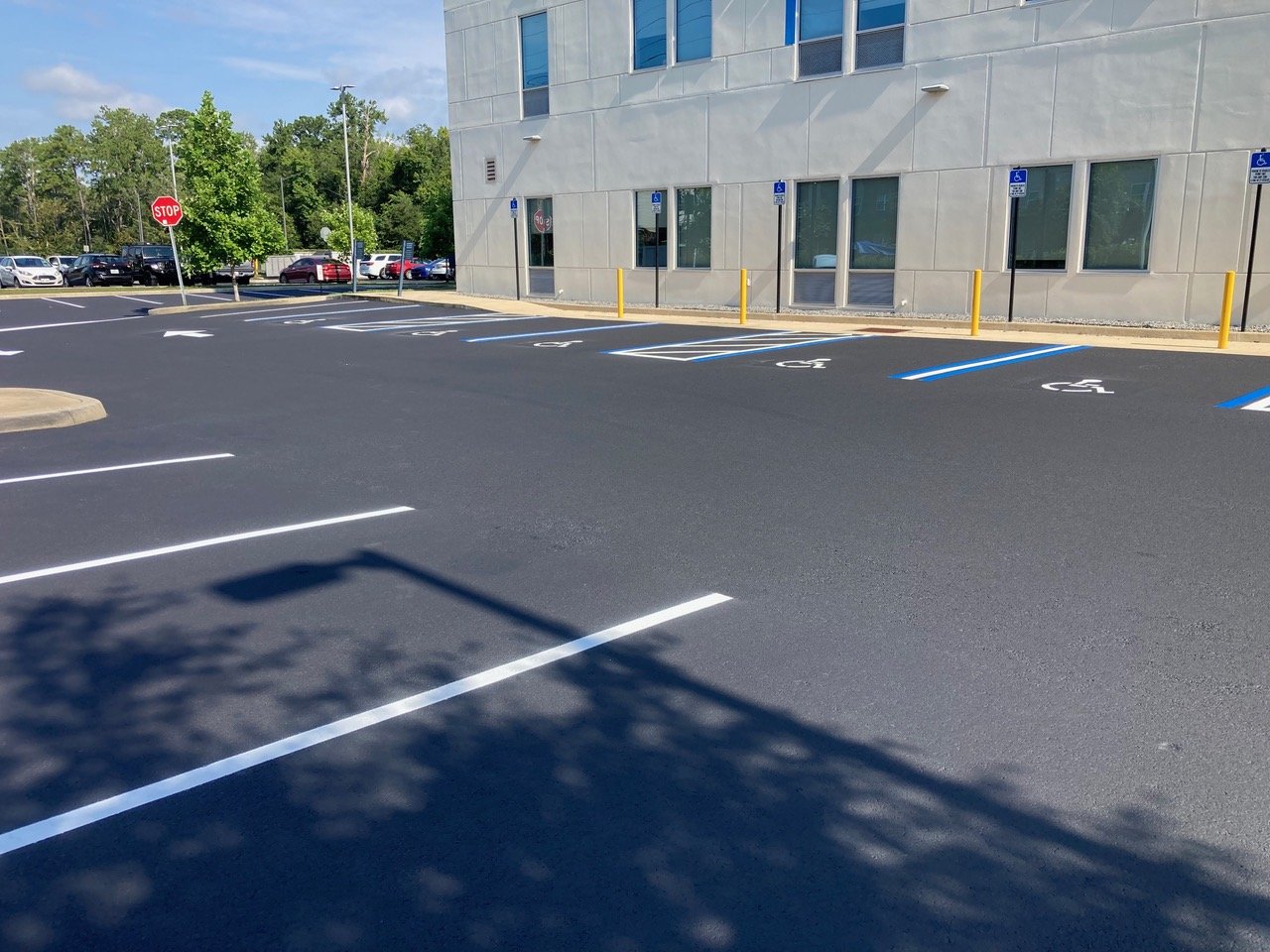
If you manage a commercial property in Florida, you already know how harsh the weather can be on your parking lot. The sun, rain, and humidity take a toll on asphalt quickly. That’s why seal application (also called sealcoating) is a must for protecting your investment and keeping your property looking professional.
In this post, we’ll break down what sealcoating is, how Florida’s climate affects your asphalt, how often you should seal your lot, and what the process involves.
What is sealcoating?
Sealcoating is the process of applying a protective coating over asphalt pavement. This coating helps block harmful UV rays, moisture, and chemicals. It also makes your parking lot look fresh and clean.
Sealcoating is often made of asphalt emulsion or other blends designed to create a smooth, protective layer. Contractors apply it with sprayers or squeegees, depending on the size and layout of the lot.
Why is sealcoating important in Florida’s climate?
Florida’s weather can seriously damage unprotected asphalt. Sealcoating gives your pavement the protection it needs to hold up against the elements. Here’s why it matters in Florida specifically:
Florida’s sun causes fading and cracking
The state gets intense sunshine almost year-round. UV rays break down the surface of asphalt, making it dry, brittle, and more likely to crack. Sealcoating helps block out those rays and slows down the aging process.
Humidity weakens the asphalt base
High humidity allows moisture to seep into tiny cracks, which can eventually lead to more serious damage. A fresh sealcoat helps make the surface less porous so it can resist moisture buildup.
Heavy rain increases risk of potholes
Florida is no stranger to seasonal storms and heavy downpours. Water can enter small cracks and wash away the base layer underneath, which creates potholes. Sealcoating provides a waterproof barrier to help prevent this.
How often should you sealcoat asphalt in Florida?
Most Florida properties should be sealcoated every 2 to 3 years, depending on traffic and exposure to the elements. For high-traffic commercial lots or areas with full sun exposure, sealing every 2 years is ideal.
If you’ve recently repaired, repaved, or sealcoated your lot, or you plan to re-stripe, it’s best to ask your contractor about proper timing so you can maximize results.
What does the sealcoating process include?
Sealcoating is a straightforward job when done by professionals. Here is what the typical process looks like:
- Surface cleaning
The lot is cleaned to remove debris, oil stains, and dirt. Any cracks or potholes are repaired beforehand. - Seal application
The sealcoat is applied in one or two coats using either a spray or squeegee. The method depends on lot size, layout, and weather conditions. - Drying time
The surface usually needs 24 hours to dry completely. Humidity or low sunlight may slow drying, so plan for at least one full day without traffic. - Re-striping the lot
After the seal is dry, your parking lines, ADA markings, arrows, and symbols are painted back on.
When is the best time to sealcoat in Florida?
The best time to apply sealcoat in Florida is during dry months, typically in the spring or early fall. These seasons provide warm temperatures and fewer rainstorms, which helps the seal dry faster and more evenly.
Avoid sealcoating during rainy weeks or extremely humid conditions, as moisture in the air can slow down the drying process and reduce effectiveness.
What are the benefits of sealcoating?
Sealcoating adds several key benefits for property owners in Florida:
- Protects your pavement from sun, rain, and humidity
- Slows down surface deterioration and oxidation
- Helps prevent cracks and potholes
- Improves curb appeal and appearance
- Makes line striping more visible
- Reduces long-term maintenance and repair costs
How can you tell if your lot needs to be sealcoated?
Here are some signs your parking lot may be ready for a new coat:
- The surface looks faded or gray instead of black
- You can see cracks forming or existing ones getting worse
- Rainwater is pooling in areas instead of running off
- The surface feels rough or brittle
- It has been more than two years since your last seal
If you’re not sure, a quick inspection by a local contractor can give you a clear answer.
Is sealcoating worth the cost?
Yes. For Florida property owners, sealcoating is a smart and cost-effective way to protect your asphalt. Without it, you’ll end up dealing with cracks, potholes, and expensive repairs much sooner than you should.
A properly sealed lot also makes a better first impression on customers, tenants, or guests. It shows that you take care of your property and value safety and appearance.
Need sealcoating help in Central Florida?
At A-1 Parking Lot Renewal, we specialize in sealcoating and parking lot maintenance that’s built for Florida weather. We know how to apply the right products at the right time, so your asphalt lasts longer and looks better.
If you’re seeing wear and tear on your lot or just want an honest assessment, get in touch with us. We’re happy to take a look and let you know if it’s time to seal.
Request a Free Quote
About A1 Parking Lot Renewal Team
A-1 Parking Lot Renewal, Inc. is a small family-owned and operated business specializing in parking lot maintenance. It was originally started in April 2014 out of a passion for making parking lots appealing, safe, and functional.
Using nothing but the highest quality materials and DOT-approved paints, you can rest easy that your parking lots will be have superior coverage and durability.
We have been covering the Central Florida area, including, but not limited to Daytona Beach, New Smyrna Beach, and Port Orange, since October 2018. Concrete or asphalt striping can renew parking lots, marking, thermoplastic, applying asphalt seal coat, or other means revitalizing your parking lot.
